
The Role of Animation in Thought Leadership Content
Animation turns complex ideas into clear, memorable content. This approach helps your organisation stand out as an industry authority.
Across the UK, more businesses pick animated formats to build trust and show expertise, often getting better results than plain text.
Defining Animated Thought Leadership Assets
Animated thought leadership assets use motion graphics, explainer videos, and data visualisations to highlight your expertise. These might include animated research findings, trend analyses, and expert commentary aimed at informing your audience.
Motion graphics let you showcase original ideas in ways that grab attention. For example, an asset could include animated charts with expert analysis or character-driven scenes showing industry hurdles.
At Educational Voice, we create everything from 60-second social media clips to 3-minute explainer videos that simplify tough topics.
Common animated thought leadership formats:
- Animated white papers and research summaries
- Data visualisation videos
- Educational series on industry topics
- Animated case studies
- Expert interview enhancements with visual overlays
These assets shine when you want to establish credibility through visual storytelling in your field. In Belfast, production usually takes 4-6 weeks, depending on how complex things get.
Why UK Organisations Use Animation
UK organisations pick animation because it delivers better engagement than static content. It also helps position executives as forward-thinking leaders.
Animated thought leadership content grabs attention on platforms where long reports just don’t get noticed.
Animation lets you share data-heavy insights without overwhelming people. For example, a financial services firm can use animated graphs to show trends, making things clearer than any spreadsheet could.
Manufacturers use animation to show process improvements that photos simply can’t capture.
“Animation lets you guide viewers through complex information, keeping them engaged all the way,” says Michelle Connolly, founder of Educational Voice.
Thought leadership videos combine authoritative content with engaging storytelling. This combo is vital when you’re fighting for attention in crowded industries.
Businesses across Northern Ireland and the UK report more shares and longer viewing times with animated content than with traditional articles.
Comparing Animation with Static Visual Formats
Animation beats static infographics and slide decks when you need to show change, progression, or complex relationships. Static formats capture a single moment, but animation shows how things move and connect.
Key differences:
| Format | Best For | Engagement | Production Time |
|---|---|---|---|
| Static infographic | Quick data snapshots | Moderate | 3-5 days |
| Animated video | Complex explanations | High | 4-6 weeks |
| Slide deck | Detailed reports | Low | 1-2 weeks |
Static visuals work for simple comparisons or single data points. Use animation to show how markets evolve or how processes unfold.
A pharmaceutical company, for example, benefits more from animation when explaining drug development stages than from static diagrams.
Your animated content tends to travel further on social platforms. LinkedIn’s algorithms prefer video, so your thought leadership can reach more people.
Try starting with one animated piece and see how your audience reacts before building out a full series.
Benefits of Animation for UK Thought Leadership

Animation makes your thought leadership stronger by turning complex ideas into content people actually understand. It helps you build lasting connections with your audience.
Clear visual storytelling keeps viewers interested and positions you as an authority.
Improving Audience Retention and Engagement
Animated content holds attention much longer than static posts or heavy reports. Movement, colour, and visual metaphors work together to keep people watching.
At Educational Voice, we’ve seen Belfast clients get view completion rates above 80% with animated thought leadership. Animation breaks down complicated concepts into bite-sized visuals that are easy to follow.
Animated explainer videos generate higher engagement rates through likes, comments, and shares, especially on LinkedIn. Presenting data with motion graphics instead of spreadsheets helps people remember your message long after they watch.
Your animation might include:
- Character-driven narratives to humanise business concepts
- Data visualisation to turn stats into stories
- Visual metaphors to make technical info easier
A 90-second animated video can cover as much as a 1,500-word article and keep people’s attention the whole way. That’s a huge plus for busy decision-makers.
Keep an eye on your metrics. Compare animated content to your old static posts and see how much your watch time and interactions go up.
Boosting Trust and Credibility
Professional animation shows you care about quality communication. That effort reflects well on your brand’s reliability.
When you present ideas with polished visuals, people see your organisation as trustworthy and established.
“Animation proves you respect your audience’s time by making things easy to understand,” says Michelle Connolly, founder of Educational Voice.
“We’ve helped Northern Ireland businesses turn technical whitepapers into animations clients actually finish watching.”
Building expertise through video means sticking to a consistent style and message. Your animation should keep a cohesive visual identity across all pieces, helping people recognise your brand every time.
Credibility grows when viewers see you’ve put time and effort into explaining your research or methods. A good animation usually takes 4-6 weeks to make, and audiences notice that commitment.
Add small touches like accurate diagrams or properly cited data in your animation. These details show you really know your subject.
Supporting Expert Positioning
Animation lets you show specialist knowledge in ways text alone can’t. Complex frameworks and processes become clearer when you animate them, showing your mastery.
Video-based thought leadership makes your business look like the go-to expert. When UK audiences can see your unique approach through animation, they’re more likely to trust your expertise.
We work with clients across Ireland to turn technical know-how into visual stories anyone can understand. This helps bridge the gap between your expertise and the audience’s understanding.
Your animated thought leadership should focus on:
- Original research findings shown with clear data visualisation
- Unique methodologies explained step-by-step with visuals
- Industry predictions brought to life with scenario-based animation
Pick one key insight that sets you apart. Build your animation around it, supporting it with evidence and clear explanations. Focusing like this helps your expert positioning come through loud and clear.
Key Formats: Explainer Videos and Infographics
Animated explainer videos break down complex ideas into short, visual stories. Infographics turn data into clear, shareable graphics.
Motion graphics add movement, making abstract information much easier to grasp.
Animated Explainer Videos
Animated explainer videos come in handy when you need to clarify complicated concepts quickly. These short animations use narration, visuals, and sometimes music to get your message across in less than two minutes.
They help show your expertise and keep people interested.
At Educational Voice, we make animated explainer videos that simplify technical subjects for UK audiences. Most projects take 4-6 weeks from start to finish, including scripting, storyboarding, and animation.
“Your explainer video should answer just one real question your audience has, not try to cover everything,” says Michelle Connolly, founder of Educational Voice.
Professional 2D animation prices depend on length and detail. Most businesses see better engagement than with text-only content.
The animation style matters. Clean, simple designs often get the message across better than overly detailed ones.
Your script is the backbone of your explainer video. Keep it conversational and focus on benefits, not just features.
Data Visualisation Through Infographics
Infographics show research findings and stats in a way people can understand at a glance. They use charts, icons, and minimal text to make data stick.
Unlike animated videos, infographics are static images that people can share easily.
We make infographics for Belfast and UK-wide clients who want to share survey results or industry trends. A good infographic takes 1-2 weeks to create, including data analysis and design.
Use infographics when you’ve got strong numbers to share. They work well on LinkedIn and in email newsletters.
Pick only the most relevant data points. Too much information just confuses people.
Colour choice matters for readability. Stick to your brand colours but make sure there’s enough contrast. Always test your infographic on mobile before publishing.
Motion Graphics for Complex Ideas
Motion graphics add animation to graphic design, creating movement that guides the viewer’s eye. They’re great for abstract concepts that static images just can’t explain.
In Northern Ireland, we use motion graphics to help businesses explain their processes or frameworks. A 30-second motion graphic usually takes 2-3 weeks from design to final tweaks.
Thought leadership video content benefits from motion graphics when you need to show workflows or changes. The movement itself signals progress.
You can reuse motion graphics across presentations, websites, and social media.
Start with a clear visual hierarchy. Put your main message front and centre.
Time your animations to match voiceover or on-screen text. Every animated element should have a purpose, not just move for the sake of it.
Thought Leadership Video Strategy for the UK Market
Animation gives your thought leadership a boost by turning complex insights into visual stories people remember. A solid content strategy keeps your brand authority consistent on every platform.
Aligning Animation with Content Strategy
Your animation should support your broader content strategy, not sit in a bubble. At Educational Voice, we team up with clients across Belfast and the UK to map out their thought leadership themes before we even sketch a frame.
Start by picking three to five core topics where you know your stuff best. Build your animated content around these, using different formats to keep things fresh.
One client might roll out a series of 90-second explainer videos on regulatory changes. Another might create longer interviews with their leadership team.
Key alignment checkpoints:
- Does each video tackle a real pain point your audience faces?
- Can you use the animation style across all your branded content?
- Will this piece help with lead generation or boost brand awareness?
The production timeline matters. A typical 2-minute animation takes four to six weeks from idea to delivery, so factor that in when you plan your content calendar.
We usually suggest starting with a flagship piece. Then you can cut it down for social media, squeezing the most out of your investment across different channels.
Campaign Activation and Content Calendar Planning
Thought leadership programmes work best with coordinated release schedules, not random video drops. I build content calendars that match animation releases with industry events, seasonal trends, and your sales cycles.
Map out your year in quarters. Q1 could focus on industry trends, with animations exploring predictions and analysis. Q2 might highlight case studies and client success stories.
This approach keeps things varied but consistent.
Sample quarterly structure:
| Quarter | Theme | Animation Format | Distribution |
|---|---|---|---|
| Q1 | Industry Trends | Data visualisation shorts | LinkedIn, email |
| Q2 | Client Outcomes | Case study narratives | Website, events |
| Q3 | Process Innovation | Behind-the-scenes | Social, blog |
| Q4 | Year Ahead | Executive interviews | Webinar, PR |
Release one major piece each month. Then create three or four social cuts from each one.
This gives you 12 hero animations and over 40 supporting assets every year. Northern Ireland businesses often miss the value of repurposing. One five-minute animation can become ten LinkedIn posts, three blog articles, and content for your email campaigns.
Audience-Focused Visual Storytelling
Your animation style needs to match how your audience actually consumes information, not just what looks flashy. Financial services clients usually respond to clean data visualisation. Creative agencies, though, prefer character-driven stories.
We tried this with a Belfast tech firm. Their first brief asked for fancy 3D animations. But once our audience research showed their decision-makers watched content on mobiles during commutes, we switched to simple 2D motion graphics with clear text. Engagement doubled.
Think about these factors:
- Viewing context: Desktop presentations need a different pace than mobile scrolling.
- Technical literacy: Adjust how complex your content is, depending on your audience’s familiarity.
- Cultural references: UK-specific examples hit home more than generic international ones.
“Your thought leadership animation should answer one question your audience is actually asking, not show off every skill you have,” says Michelle Connolly, founder of Educational Voice.
Test one animation style with a small group before you commit to a full series. Track completion rates, not just views, to see what really grabs attention and positions you as the go-to in your market.
Building Credibility and Influence with Animated Content
Animated content changes how UK businesses show their expertise and reach new audiences. Quality visuals highlight knowledge and build recognition, while real examples prove your methods work.
Establishing Expertise Through Visuals
Your animated content should prove your knowledge, not just claim it. When you break down complex ideas into clear visuals, potential clients see you really understand your field.
This builds trust much faster than text alone.
At Educational Voice, we often help professional services firms in Belfast explain technical concepts to non-specialists. A well-made animation can turn a complicated process into something anyone can grasp in 90 seconds.
That instant clarity shows you truly understand your subject.
Animation in building trust and credibility depends on accuracy and attention to detail. Use visuals with specific data, realistic scenarios, and examples from your industry.
Generic animations weaken your position, but precise content makes you look sharp.
“When a client sees their exact challenge in your animation, they know you’ve worked with companies like theirs before,” says Michelle Connolly, founder of Educational Voice.
Try including these in your thought leadership animations:
- Correct industry terminology
- Up-to-date data shown clearly
- Real challenges your clients face
- Solutions you’ve actually used
Before you commission your animation, pick the most important point you want to get across. Build your whole visual story around that.
Enhancing Brand Visibility
Animated thought leadership content gets shared more than static posts, helping you reach more people on LinkedIn, Twitter, and industry blogs. If your animation really helps, viewers tag colleagues and pass it around their networks.
This kind of organic sharing grows your influence without paid ads.
We’ve watched Northern Ireland clients get noticed across the UK thanks to animated explainer videos in thought leadership. One professional services firm’s 2-minute animation on regulatory changes hit over 15,000 views in three weeks and brought in enquiries from people who’d never heard of them before.
Your animated content also helps with PR. Journalists and industry publications want multimedia, and a good animation gives them visuals for their stories. This boosts your chances of getting featured in trade publications.
Animation increases visibility by:
- Raising engagement rates on social media
- Keeping people on your site longer
- Improving email open rates when you include thumbnails
- Making conference presentations more memorable
Track things like view duration and share rates to see which topics connect with your audience. Adjust your content strategy based on what you find.
Using Case Studies in Animation
Animated case studies turn abstract success stories into visual stories that show your methods and results. Instead of asking prospects to imagine outcomes, you show them exactly how your approach works.
At Educational Voice, we turn client case studies into animations with a clear problem-solution-result structure. For a Belfast consultancy, we made a 90-second animation showing how they helped a manufacturer cut costs by 23%. The animation used straightforward graphics to show the before state, the steps taken, and the measurable results.
Case study animations work well for thought leadership because they prove your point while teaching. You’re not just claiming expertise, you’re showing how you use it. This mix of education and proof boosts both credibility and influence in your sector.
When you plan case study animations, ask for animation consultation services to make sure your story works for both marketing and education. Your animation should teach viewers something useful and show what you can do.
Add details like timelines, percentage improvements, and actual challenges faced. These specifics make your case studies feel genuine, not just another sales pitch.
Design Best Practices for Thought Leadership Animation
Strong visual hierarchy guides viewers through complex ideas, while good use of white space stops cognitive overload. Visual metaphors can turn abstract concepts into images that stick with your audience.
Applying Visual Hierarchy and White Space
Your animation needs a clear visual hierarchy that guides attention to the most important info first. Use size, colour contrast, and position to create focal points and lead viewers logically.
White space is a key tool for keeping things clear. When we design animations for UK clients, we find that leaving enough breathing room between elements helps people absorb information without feeling swamped.
This is especially true for data-heavy thought leadership content, where too many visuals can muddle your message.
Try these hierarchy tips:
- Scale: Make key messages 1.5 to 2 times bigger than supporting text
- Colour: Use your brand colours to highlight critical points
- Motion: Animate important elements with purpose, not just for show
- Timing: Give viewers 2-3 seconds to take in each key concept
At Educational Voice in Belfast, we structure animations so information appears step by step, not all at once. This layered approach matches how people naturally process visuals and helps them remember your thought leadership insights.
Creating Effective Visual Metaphors
Visual metaphors turn complex business ideas into images your audience recognises straight away. A good metaphor bridges the gap between abstract and concrete understanding.
The best visual storytelling tools make tough ideas simple and connect emotionally. For Northern Ireland businesses explaining technical services, we often use metaphors like building blocks for modular solutions or gears for integrated systems.
Pick metaphors that fit your audience’s existing knowledge. A Belfast manufacturing company might use production line imagery, while a Dublin tech firm could go for network visuals.
Try to avoid clichés like light bulbs for ideas or mountains for challenges.
Test your metaphors with a small group of your audience before you go into full production. If you have to explain them in detail, they’re not working. “The best visual metaphors work instantly because they tap into shared cultural understanding, not forced symbolism,” says Michelle Connolly, founder of Educational Voice.
Optimising for Accessibility and Inclusivity
Accessible thought leadership content reaches more people and shows you care about inclusive communication. Your animation should work for viewers with different abilities and needs.
Use these accessibility features right from the start:
- Colour contrast: Keep at least a 4.5:1 ratio for text
- Captions: Add accurate subtitles for all spoken content
- Audio description: Narrate key visual elements
- Font size: Use at least 16pt for on-screen text
- Motion sensitivity: Avoid rapid flashing or too much movement
The user experience gets much better when you design with accessibility in mind. We make sure animations play smoothly on all devices and add pause controls for anyone who needs extra time.
Think about cultural inclusivity too. Show diverse characters and avoid visuals that assume a specific culture. Your thought leadership animation should feel right whether someone’s watching in Manchester, Dublin, or Edinburgh.
Before you finish your animation, check it against WCAG 2.1 AA standards to make sure it meets accessibility benchmarks.
Tools and Platforms for Animation and Visual Content Creation
Professional animation studios use industry-standard software like Adobe Creative Suite for complex productions. Accessible platforms such as Canva and Piktochart let you make quick supporting visuals. Data visualisation tools like Tableau turn business information into animated graphics that strengthen your thought leadership message.
Professional Design Software Options
Adobe Creative Suite sits at the heart of professional animation production in UK studios. Adobe Animate handles vector-based character animation and interactive content. After Effects creates motion graphics and effects for thought leadership videos.
At Educational Voice, we use Adobe Premiere Pro for final video editing and colour grading. This toolkit lets us deliver broadcast-quality animations that position your brand as an industry leader.
The software takes real skill, which is why most businesses work with animation studios instead of trying to do it all in-house. Our Belfast team usually spends two to three weeks on a 60-second thought leadership animation with Adobe tools.
Adobe Character Animator speeds up making spokesperson animations. This works well for executives who want to appear in animated content without studio filming.
These professional tools work well together, making it easy for us to move projects between apps while keeping your visual content library consistent and high-quality.
Accessible DIY and Online Tools
Canva makes design simple and accessible, letting you create static graphics and basic animations that support your main animation projects. Your marketing team can use Canva for social media posts that feature animated elements or stills from thought leadership videos.
Prezi lets you build lively presentations with zooming transitions, which work well at conferences in Northern Ireland and across the UK. These tools aren’t a replacement for custom animation, but they can extend your visual content approach.
Piktochart focuses on infographics and data presentation, so your team can quickly produce materials that reinforce messages from your animated leadership pieces. We often tell clients to use these platforms for quick content between major animation projects.
But you’ll run into limits with these platforms for thought leadership animation. They can’t match the character animation, custom motion graphics, or brand-specific style that set professional thought leadership content apart from basic marketing assets.
Data Visualisation Software
Tableau turns complex datasets into clear visuals.
Distribution and Promotion of Animated Thought Leadership Content
Your animated thought leadership content needs a clear distribution plan across LinkedIn, media outlets, and organised campaigns to reach decision-makers. Mixing platform-specific tactics with traditional PR spreads your message and helps you get the best return on investment.
Strategic Sharing on LinkedIn and Social Platforms
LinkedIn stands out as the main platform for animated thought leadership. Executives check in for professional updates and industry trends. Your videos get more traction when you upload them straight to LinkedIn, since the algorithm boosts native content in feeds.
I suggest posting animations from executive accounts, not just the company page. People trust content from real leaders more, which usually means more engagement. You can also cut longer animations into short clips for LinkedIn stories and posts, giving your audience several chances to see your message.
Tracking engagement metrics like view count and click-through rates shows you which topics your UK audience cares about. At Educational Voice, we help Belfast clients test animation lengths between 60 and 90 seconds to find what works best on LinkedIn.
Sprout Social lets you schedule posts across platforms and check engagement as it happens. Make sure your animation includes captions, since most LinkedIn users watch videos on mute during work.
Key LinkedIn tactics:
- Share weekly animated takes on trending industry topics
- Tag relevant industry contacts to grow your reach
- Use LinkedIn’s newsletter for serialised animated content
- Reply to comments in the first hour to boost your visibility
Enhancing PR and Media Coverage
PR teams can use your animated content to secure placements in UK and Irish industry publications and news outlets. Journalists like visuals that break down complex topics, so animations often get picked up for editorial coverage and expert commentary.
Create shorter, 30-second versions of your animations for media use. These fit better on publication websites and social channels but still deliver your core message. Include your animation in press releases as an embedded asset or a download link to increase your chances of coverage.
We’ve seen Belfast businesses get into trade publications by offering exclusive animated takes on industry research. “Your animation becomes a visual news asset that journalists can embed directly into articles, which dramatically increases your chances of securing coverage,” says Michelle Connolly, founder of Educational Voice.
Start with industry-specific publications instead of general business media. Specialist outlets have audiences who appreciate detailed thought leadership and are more likely to share your content within their networks. Build relationships with journalists in your sector for recurring coverage when you release new animated content.
Planning Multi-Channel Campaigns
Multi-channel distribution helps your animated thought leadership reach people on their preferred platforms and in different formats. A structured approach increases engagement with high-value stakeholders by tailoring content variations rather than posting the same thing everywhere.
Coordinate timing across email marketing, social platforms, your website, and paid promotion. Start with a longer-form animation on your website to capture leads, then roll out shorter versions on social channels over the next few weeks. This keeps your brand visible and serves different audience needs.
Budget for targeted LinkedIn ads to get your animation in front of the right job titles and industries. Pair organic posts from executive accounts with sponsored content from your company page to reach more UK decision-makers.
Essential campaign elements:
- Email sequences with embedded animation previews
- Landing pages featuring full animations and extra resources
- Retargeting campaigns for viewers who watched at least half
- Partner collaborations to cross-promote to relevant audiences
Try different calls to action in your animations for each channel. LinkedIn users might sign up for webinars, while email readers may prefer downloading reports. Track performance on each channel to refine your future approach and spot which platforms bring in the best engagement for your business.
Audience Engagement Techniques in Animated Content

Modern animated thought leadership needs clever engagement techniques to turn passive viewers into active participants. Gamification and interactive formats help create stronger connections, while solid measurement systems make sure your investment brings real business results.
Gamification Elements
Gamification changes standard animated content into experiences that encourage participation and hold attention. By adding game-like features to your thought leadership animations, you tap into people’s natural drive for achievement.
At Educational Voice, we’ve helped Belfast clients add simple gamification elements like progress bars, badges, and point systems to their animations. These features boost completion rates by making viewers want to finish your message.
You don’t need complicated development for effective gamification. Try these:
- Quiz questions at key points
- Clickable hotspots with extra info
- Progress bars showing how much is left
- Interactive scenarios where viewers pick a path
Match your gamification strategy to your thought leadership goals. If you’re explaining complex topics, add interactive elements in educational content so viewers can explore at their own pace.
Pick one or two gamification features that really add value, rather than crowding your animation with unnecessary extras.
Interactive Video Formats
Interactive video formats put viewers in control, which increases engagement over standard linear animations. These formats let your audience make choices and personalise the content to their interests or knowledge level.
Branching narratives work especially well for thought leadership. Viewers choose topics to explore, creating a custom learning journey. This approach respects their time and shows off your expertise.
Clickable elements in the animation let viewers dig deeper into points that interest them, without forcing everyone through every detail. At Educational Voice, we’ve made interactive animations for Northern Ireland businesses where viewers click on data points to see supporting research or case studies.
Animation techniques for audience engagement include hotspot interactions, 360-degree views, and choose-your-own-path stories. These formats usually take two or three weeks longer to produce than standard animations, but the extra engagement is worth it.
Pick an interactive format that solves a real problem, like serving audiences with different expertise levels or covering a broad topic where viewers have different interests.
Measuring Engagement Metrics
Measuring engagement metrics tells you if your animated thought leadership content meets your business goals. Focus on metrics that matter to your objectives, not just numbers that look good on paper.
Track these key metrics:
- Average view duration and completion rates
- Click-through rates on your calls to action
- Social shares and comments
- Lead generation and conversions
- Time spent on page after viewing
Set up custom tracking for interactive elements. If your animation has clickable sections, check which topics get the most interaction so you can plan future content.
UK animated content engagement shows that animations can boost user interaction by up to 300% compared to static posts. Your results will depend on content quality, distribution, and how relevant your message is.
Each platform tells a different story. LinkedIn analytics show different engagement patterns than YouTube or your website. We help clients set up measurement frameworks before production starts, so tracking codes are ready when the animation launches.
Compare your new metrics to old content to see the real impact on your thought leadership strategy.
Integrating Animation into Wider Thought Leadership Programmes
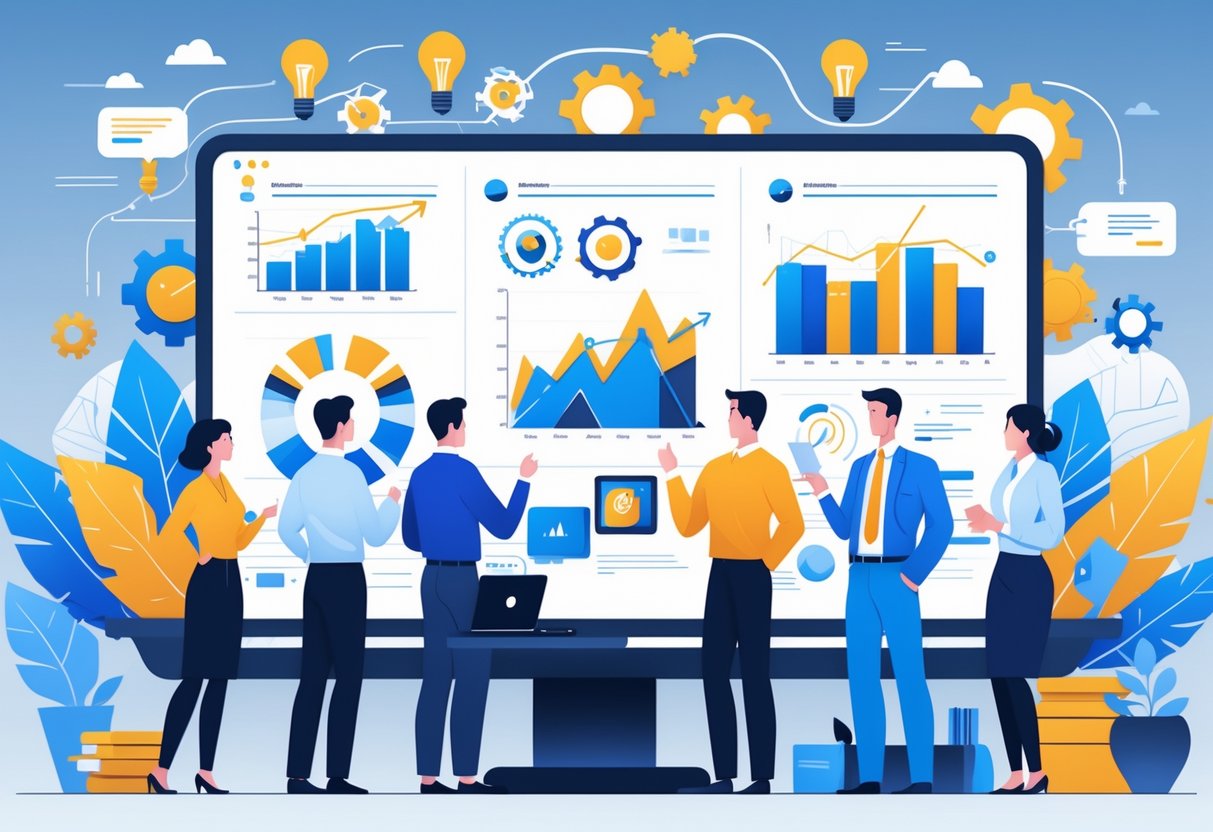
Animation works best when it supports your existing content, not when it tries to replace everything. Your thought leadership programme gets stronger by mixing written insights with animated video and visual elements that back up your message across different platforms.
Blending Blogs, Videos, and Visuals
Your thought leadership content works better when you link written blogs with animated explainers on the same topic. A detailed blog might break down a tricky industry issue in 1,500 words, while a 90-second animation distils the main point into something easy to share on LinkedIn.
At Educational Voice, we often suggest creating a main research report or white paper, then splitting it into shorter animated segments. Each animation focuses on a single key finding or recommendation. This approach suits UK businesses aiming at busy decision-makers who want information fast.
Plan your content calendar so blogs and videos go live together or in close sequence. You might publish a blog on Monday, then share an animation on Wednesday that shows the idea in action. This gives your audience several ways to engage and backs up your expertise.
Sustaining Audience Interest
Your thought leadership programme needs regular content to stay visible and credible. Animation helps you keep the momentum because it brings variety and stops your audience from getting bored.
Try mixing interview-style thought leadership videos, data visualisations, and animated case studies throughout the year. This rotation keeps things fresh and meets different learning preferences. Some people like reading deep analysis, while others connect better with visuals.
“We’ve seen Belfast-based clients get much better engagement by sharing one animated piece each month instead of dumping a lot of videos at once,” says Michelle Connolly, founder of Educational Voice. “Consistency builds recognition, and animation production timelines make regular output possible without burning out your subject experts.”
Evolving with Thought Leadership Trends
Your animation style and delivery need to keep up as audience expectations shift. What works in 2024 could feel tired by 2026, especially as platforms roll out new features and formats.
Short-form vertical animations now perform well on social channels. Longer horizontal videos still work best on your website and in email campaigns. Review your analytics every few months to see which formats get the best response from your UK and Irish audiences.
For your next step, audit your current thought leadership content and pick three pieces that would benefit from animated companion videos. This exercise helps you spot natural places for animation without needing to redo your entire programme.
Legal, Ethical, and Brand Considerations

When you create animation for thought leadership, you must protect your brand legally and build trust through ethical practices and consistent messaging. Animation amplifies your message, but it also amplifies mistakes in copyright, data use, or brand alignment.
Maintaining Brand Consistency
Your thought leadership animation needs to reflect your brand identity if you want to build credibility with your audience. This means using your colour palette, typography, and tone of voice in every frame.
At Educational Voice, we work with businesses in Belfast and across Northern Ireland to create branded content that fits existing visual guidelines. We always start by reviewing brand books and past marketing materials to make sure everything lines up.
This approach stops that awkward disconnect you get when an animation looks out of place next to your other content.
Key brand elements to specify:
- Logo placement and usage rules
- Approved colour codes (not just close matches)
- Font licensing for animation use
- Character design that matches your brand personality
- Animation pacing that fits your brand tone
“Your animation should feel like a natural extension of your brand story, not some side project,” says Michelle Connolly, founder of Educational Voice. “I’ve watched businesses lose trust when their thought leadership animation clashes with their established visual identity.”
If your branding looks inconsistent, you weaken your authority. When viewers see a professional animation that matches your website, reports, and other materials, they start to see your organisation as established and reliable.
Ethical Data Visualisation
Your thought leadership content gains authority when you show data honestly through animation. Misleading visualisations destroy your credibility faster than almost anything else.
We stick to ethical practices in data animation by keeping proportions accurate, labelling things clearly, and always listing sources. Distorted charts or cherry-picked data might look impressive, but they damage the trust you’re trying to build.
Common ethical issues to avoid:
- Truncated axes that exaggerate differences
- Cherry-picked timeframes that hide the real context
- Unlabelled or misleading scales
- Animated transitions that hide actual data values
- Missing sources or sample sizes
Animation can make complex data easier to understand, but you have to use that power responsibly. When we animate statistics for UK businesses, we check that every percentage, comparison, and trend really matches the facts.
A three-second animated chart can shape what viewers think for years.
Your audience includes specialists who will spot any manipulation. Present your data clearly, admit any limits, and let the real meaning come through with good animation.
Copyright and Accessibility
Copyright and intellectual property rights protect your animation investment and stop you from infringing on others’ work. Every music track, image, or voice recording needs proper licensing before you publish anything.
We handle licensing during production to avoid expensive legal problems later. This covers royalty-free music, original compositions, or properly licensed commercial tracks. Stock footage, reference images, and font licences all need checking before they go into your thought leadership animation.
Accessibility broadens your reach and shows ethical responsibility. Subtitles help people watching without sound, and audio descriptions support visually impaired viewers. You can’t treat these as extras—they’re essential for professional thought leadership content.
Accessibility requirements:
- Accurate subtitles with proper timing
- Enough colour contrast (WCAG 2.1 standards)
- Audio descriptions for key visuals
- Keyboard-navigable interactive elements
Sort out copyright clearance and accessibility at the start of production. Trying to add them later costs more and slows down your content launch.
Frequently Asked Questions

Animation brings tricky business ideas to life and helps build trust with professional audiences. Production costs can vary a lot depending on style and length. Success metrics focus more on engagement depth than just view counts.
What are the best practices for incorporating animation into thought leadership content?
Keep text minimal and give viewers time to process each visual. When we work on thought leadership animations, we count out timing to make sure text appears at a natural reading pace.
The screen shouldn’t feel cluttered. Less is more with visual design, letting your audience focus on the main point instead of getting distracted.
We often go back and forth with clients to refine scripts and cut out unnecessary words. One slide crammed with information loses viewers faster than spreading it across two or three clear frames.
At Educational Voice, we usually start with rough PowerPoint decks from clients and turn them into streamlined visual stories. This editing process matters as much as the animation itself.
Your animation should match your brand identity and stay professional and accessible. Test your content with a small group from your audience before a full release to catch anything confusing.
How can animation enhance the effectiveness of thought leadership messages in the UK market?
Animation turns abstract business concepts into something concrete and memorable for decision-makers. UK professionals appreciate visual storytelling that respects their time and intelligence.
You can explain complex data or processes in 60 seconds through animation, when the same thing might take several pages of text. That efficiency matters when you’re competing for attention in busy inboxes and LinkedIn feeds.
“Animation lets you present forward-thinking ideas without the limits of live footage or stock images, which helps position your business as innovative,” says Michelle Connolly, founder of Educational Voice.
Visual content builds trust in a different way than written thought leadership. According to research, 59% of decision-makers trust thought leadership more than marketing materials, and animation adds another layer of credibility through production quality.
Belfast-based businesses using animation for thought leadership often see stronger engagement from both UK and Irish markets. The medium crosses regional lines but keeps a professional tone.
What types of animation are most impactful for thought leadership videos intended for a professional audience?
Clean 2D animation works best for professional audiences who want clarity over flashy effects. This style shows authority and keeps production timelines reasonable for regular content.
Explainer-style animations with simple character designs or icon-based motion graphics fit most business topics. They let your ideas stand out without distracting from the message.
Whiteboard animation and kinetic typography both work well for presenting data or research findings. They feel educational instead of salesy, which fits thought leadership goals.
Skip cartoonish styles unless your brand really calls for it. Professional audiences in finance, tech, or consulting expect a more polished look.
Try mixing animation styles within a series to keep things fresh but stick to the same branding elements. Your colour palette, typography, and pacing should stay recognisable even if visuals change.
What is the typical cost range for producing high-quality animated content for thought leadership purposes?
Budget between £2,000 and £8,000 for a professional 60 to 90-second thought leadership animation in the UK. Animation service costs depend mostly on style complexity and how many revisions you need.
Basic 2D animations with limited character movement sit at the lower end. More advanced productions with custom illustrations, detailed motion, and extra scripting land at the higher end.
At Educational Voice, we usually take two to three weeks for a standard thought leadership piece from concept to delivery. If you need it faster, costs go up because we have to dedicate more team members at once.
Hidden charges can inflate your final bill if you don’t clarify revision policies and script fees at the start. Always ask for a detailed breakdown showing what each stage costs.
Studios in Northern Ireland often offer better rates than London but keep the same quality. Don’t forget extra costs like voiceover talent, music licensing, and subtitles.
How do metrics for the success of animated thought leadership content differ from traditional content?
Focus on watch time percentage, not just total views, when you measure animated thought leadership success. A video that 70% of viewers finish outperforms one with three times the views but only 20% completion.
Engagement depth matters more than reach for this kind of content. Track how many viewers come back to watch more videos in your series or visit your website after watching.
We measure success partly by the quality of conversations clients have after prospects watch their animations. Decision-makers often mention specific points from videos during sales calls, which shows real engagement.
LinkedIn and other professional platforms provide better analytics for B2B thought leadership than YouTube’s surface-level stats. Watch for shares within your industry and comments from relevant professionals.
Traditional blog posts might bring more immediate traffic, but video content builds trust in a different way. Your animation might reach fewer people at first, but it usually creates stronger connections with those who do engage.
Can you provide examples of successful thought leadership animations within the UK business sector?
Professional services firms across the UK use animated explainers to break down regulatory changes and industry trends. These animations help partners come across as knowledgeable guides instead of just salespeople.
Technology companies in Belfast and across Ireland create animation series that explain emerging technology to people who aren’t technical. They show off their expertise and make tricky products seem less intimidating.
Financial institutions use animation to talk about market analysis and investment strategies. The visual style makes these dry topics more interesting, yet still keeps things serious.
Management consultancies make animated case studies to show how their methods work. Animation lets them explain ideas without risking any confidential client details.
Pick a complex topic your prospects often struggle with. Then commission an animation that tackles it in a clear and approachable way. This one piece can spark conversations throughout your sales process.


